Navegando en Wired, encontré está imagen, que se supone es la primera imagen tomada desde el espacio por el GeoEye1.
Este satélite fue lanzado el pasado mes de Septiembre, pero a causa de ciertas calibraciones necesarias es hata el día de ayer que fue tomada la primera imagen.
Según Wired, Google no es dueño sino el segundo parthner más grande de la National Geospatial-Intelligence Agency.
Con una dimensión de 41 cm, con las fotos tomadas por el GeoEye1, es posible hacer zoom en una imagen y ver una base de un estadio de besibol, según Mark Brender, Vicepresidente de Comunicaciones de GeoEye1.
Fuente: elnorte.com Recopilan peticiones absurdas a expertos
Incluso hubo alguien que preguntó dónde podría conseguir una aplicación que le permitiera rastrear a los extraterrestres AFP Washington DC, Estados Unidos (26 septiembre 2008).- Los expertos de los departamentos técnicos de las oficinas están acostumbrados a recibir pedidos excéntricos, pero a veces las preguntas son tan absurdas que los dejan atónitos, según una lista de preguntas inauditas recopilada por una empresa tecnológica estadounidense.
Un ejemplo es "¿Por qué este mouse inalámbrico no está conectado a la computadora?", o bien "¿Podrías reiniciarme el internet?".
Incluso hubo alguien que preguntó dónde podría conseguir una aplicación que le permitiera rastrear a los extraterrestres.
Robert Half Technology, una empresa proveedora de profesionales en informática en Menlo Park, California, preguntó a mil 400 directivos de departamentos técnicos de diversas compañías en Estados Unidos que les enviaran las preguntas más desconcertantes que hubieran recibido de parte de compañeros de trabajo que pedían auxilio técnico.
Entre las más extrañas figuran:
- "Mi computadora me dice que presione 'cualquier tecla' para continuar. ¿Dónde está 'cualquier' tecla?".
- "¿Podrías reordenarme el teclado para que esté en orden alfabético?".
- "¿Cuáles son las previsiones meteorológicas para el año que viene?".
- "¿Me puedes instalar la televisión por cable en mi computadora?".
Y también está registrada la historia de un usuario que confundió la bandeja para insertar el CD-ROM con un apoya-vasos cómodamente incorporado a su computadora.
"¿Cómo hago para que salga de nuevo el apoya-vasos que estaba en mi computadora?", preguntó.
Katherine Spencer Lee, directora ejecutiva de Robert Half Technology, dijo que tales preguntas ponían a prueba las habilidades de los departamentos de apoyo técnico.
"Estas preguntas inusuales subrayan la necesidad de que el personal de apoyo técnico también demuestre más paciencia, empatía y sentido del humor", dijo.
Puedo agregar esta: "Me grabas internet en este disket?" No es broma, esa pregunta me la hicieron a mi..., entiéndase disket por un Floppy disk de 3½"
Me encuentro en: micarreralaboralenit a de esta entrevista hecha por Oppenheimer a Bill Gates. Son interesantes los comentarios de Gates acerca de como ve él, el desarrollo tecnológico en Latinoamerica.
He aquí parte de la entrevista:
“¿Por qué Latinoamérica no ha producido un Bill Gates?”, le pregunté, sólo a medias en broma.
“Usted, ¿se habría podido convertir en el innovador tecnológico de más éxito en el mundo, y en uno de los hombres más ricos del planeta, si es que hubiera nacido en Paraguay?”
Gates, quien estuvo en Miami como orador de la reunión anual del Banco Interamericano de Desarrollo (BID),se rió de mi pregunta. Luego, lo primero que mencionó fue la educación, especialmente la educación
secundaria.
“En casi todos los lugares del mundo en que podría haber nacido, no habría tenido las increíbles oportunidades que tuve aquí: tuve una muy buena educación, y fui increíblemente afortunado en cuanto a las circunstancias que me tocaron. En la mayoría de los lugares, habría sido simplemente un mal agricultor. Nadie hubiera aprobado las cosas que he hecho”.
Leyendo al buen Esparta doy con este artículo muy bueno hacerca de los mitos y realidades del cererbro humano.
50 mitos y verdades sobre el cerebro No es cierto que usemos sólo el 10% ni que la música de Mozart haga más inteligentes a los bebés. Su funcionamiento, sin embargo, sí puede mejorar gracias a los videojuegos. Nos permite realizar complicados cálculos o tomar decisiones sin pensar y requiere menos energía que la bombilla de una nevera. Los neurólogos estadounidenses Sandra Aamodt y Sam Wang desentrañan en 50 curiosidades los secretos de los fascinantes 1.400 gramos de materia que se alojan en el cráneo de cada uno de nosotros.
fotografías de ÁLVARO VILLARRUBIA
1. Beber no destruye neuronas. Beber en exceso durante muchos años da lugar a que se reduzca el tamaño del cerebro pero, por lo general, se trata de un fenómeno reversible. El vino tinto puede incluso proteger el cerebro, al reducir el riesgo de derrames cerebrales, siempre y cuando la dosis oscile entre dos vasos a la semana y hasta tres vasos al día como máximo.
2. Un golpe fuerte en la cabeza no cura la amnesia. Por mucho que el cine se haya empeñado en convencernos de lo contario. Tampoco se consigue con hipnosis ni con la visión de un objeto muy apreciado; en cuanto a la neurocirugía, es más probable que, en lugar de remediar la pérdida de memoria, la cause.
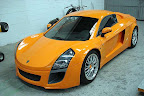
Proyectan iniciar la producción en el segundo semestre del 2008 Roberto Avilés México (22 noviembre 2007).-Diseñado y fabricado en México
Luego de tres años de desarrollo y construir varios prototipos experimentales, Mastretta Design construye la versión comercial de lo que será el primer automóvil concebido y fabricado por técnicos mexicanos.
En sus instalaciones ubicadas en la ciudad de México, 20 personas encabezadas por el creador del vehículo, Daniel Mastretta, fabrican lo que será el primer automóvil nacional deportivo, equipado y diseñado listo para presentarse a los potenciales distribuidores y clientes.
En el diseño y la creación de los prototipos, se han invertido 2.5 millones de dólares de los cuales un 15 por ciento lo aportó el Consejo Nacional de Ciencia y Tecnología (Conacyt).
Se llama Mastretta MXT, un automóvil biplaza que tendrá un motor a gasolina turbo de dos litros de desplazamiento y 200 caballos de potencia.
La suspensión fue creada por Mastretta y es del tipo paralelogramo independiente en las cuatro ruedas. El sistema de transmisión será manual de seis velocidades con control automático de tracción e incorporará dirección de piñón y cremallera.
Los frenos serán de disco ventilados con sistema antibloqueo; el chasis es de aluminio también concebido 100 por ciento por Mastretta.
El primer Mastretta MXT se fabrica con base en la norma técnica europa "Low Volume Type Approval" establecida para regular a los fabricantes de bajo volumen. Esta norma establece requerimientos de dimensiones del auto, nivel de seguridad, emisiones contaminantes y hasta calidad de la iluminación.
El precio comercial del Mastretta MXT será de 55 mil dólares y entre sus competidores principales destaca el automóvil inglés Lotus Elise con motor de 200 caballos y que reporta un valor de 50 mil dólares.
Daniel Mastretta ya tiene 15 solicitudes de potenciales distribuidores localizados en Europa y Asia.
Aunque todavía se desconoce dónde se habrá de instalar la planta de ensamble, se especula que hay dos sólidas candidatas, Toluca, en el Estado de México, o la capital poblana, por ser zonas donde trabajan importantes proveedores de autopartes.
El plan es comenzar la producción a mediados del 2008 y se fabricarían 150 automóviles al año con una inversión inicial de cinco millones de dólares; 80 por ciento de la proveeduría de autopartes se ubica en México y 20 por ciento en el extranjero.
La mayor parte de la producción tendrá como destino la exportación y sólo un 20 por ciento se venderá en el mercado nacional.
Otros competidores podrían ser el TVR T350, Caterham 7, Marcos TSO, Virago Coupé y Panoz Esperante, cuyos valores comerciales se ubican entre 40 mil y 90 mil dólares.
En el mundo existen al menos 50 de los llamados fabricantes de nicho o bajo volumen, la gran mayoría ubicados en países altamente industrializados, que producen al año entre 100 y mil unidades cada uno.
En América Latina sólo existe en Brasil el productor del automóvil Lobini cuyo precio alcanza los 65 mil dólares y del cual se ensamblan 150 unidades al año fundamentalmente para venderse en el mercado nacional.
A nivel mundial la venta de automóviles deportivos de nicho suma 20 mil unidades anuales y se estima que en cinco años podría aumentar a 40 mil.
Daniel Mastretta dirige desde hace 20 años su empresa de diseño industrial dedicada a la conceptualización de autobuses, camionetas de uso comercial y componentes automotrices.
Entre sus clientes principales están Ayco, Volvo, Catosa, Electric Vehicles International y General Motors.
También diseñan y producen réplicas de pequeños automóviles deportivos de los años 50 cuyo destino principal es el mercado externo.
__________________________________________________________ Otras fotos:
Aquí una explicación bastante clara de como funciona un código de barras.
When I was a child I stumbled upon a simple diagram that explained some of the elements found in a basic supermarket bar code. I was fascinated by it's complexity and at the same time I couldn't believe how easy it was to understand. I remeber feeling like I had found the ultimate decoder ring.
En México no tienen impedimento para hacerlo, pero creo que sería bueno que invirtieran parte de sus ganacias en algún buen programa de becas o algo que se de beneficio para los chavos!
Walmart is Mexico's largest private employer, according to Newsweek, and that doesn't include the 4,300 unpaid teenagers that it lets "volunteer" to bag groceries at its Mexican stores.
The Higher Speed Study Group has made a decision about how the next generation of Ethernet speeds will be standardized, and for the first time, a single standard will comprise two very different speeds.
Es un proyecto que consta de proporcionar laptops con un costo de alrededor de los 100 dólares. Está orientado a la educación no como un equipo de oficina. Viéndolo desde ese punto de vista es interesante todo el conocimiento que se puede transmitir en lugares remotos. Si bien en el mundo hay otros problemas como la desnutrición, etc. etc., este puede ser un buen paso de los gobiernos.
Ojalá se les dé el uso que les corresponde y ayuden a sacar(a largo plazo) a muchos niños de la situación en la que se encuentran.
By Jonathan Fildes Science and technology reporter, BBC News
Five years after the concept was first proposed, the so-called $100 laptop is poised to go into mass production.
Hardware suppliers have been given the green light to ramp-up production of all of the components needed to build millions of the low-cost machines.
Previously, the organisation behind the scheme said that it required orders for 3m laptops to make production viable.
The first machines should be ready to put into the hands of children in developing countries in October 2007.
"There's still some software to write, but this is a big step for us," Walter Bender, head of software development at One Laptop per Child (OLPC), told the BBC News website.
The organisation has not said which countries have bought the first machines.
Getting the $100 laptop to this stage has been a turbulent journey for the organisation and its founder Nicholas Negroponte.
Since the idea was first put forward in 2002, the low-cost laptop has been both lauded and ridiculed.
Intel chairman Craig Barret famously described it as a "$100 gadget" whilst Microsoft founder Bill Gates questioned its design, particularly the lack of hard drive and its "tiny screen".
Other critics asked whether there was a need for a laptop in countries which, they said, had more pressing needs such as sanitation, water and health care.
Professor Negroponte's response has always been the same: "It's an education project, not a laptop project."
The view was shared by Kofi Annan, ex-secretary General of the UN. In 2005, he described the laptop as an "expression of global solidarity" that would "open up new fronts" for children's education.
And as time passed, even some of the critics have changed their stance. Earlier this month, Intel, which manufactures what was considered a rival machine, the Classmate PC, joined forces with OLPC.
Functional design
The innovative design of the XO machine has also drawn praise from the technical community.
Using open source software, OLPC have developed a stripped-down operating system which fits comfortably on the machine's 1GB of memory.
"We made a set of trade-offs which may not be an office worker's needs but are more than adequate for what kids need for learning, exploring and having fun," said Professor Bender.
The XO is built to cope with the harsh and remote conditions found in areas where it may be used, such as the deserts of Libya or the mountains of Peru.
Professor Negroponte first proposed the laptop in 2002
For example, it has a rugged, waterproof case and is as energy efficient as possible.
"The laptop needs an order of magnitude less power than a typical laptop," said Professor Bender. "That means you can power it by solar or human power."
Governments that sign up for the scheme can purchase solar, foot-pump or pull-string powered chargers for the laptop.
And because it may be used in villages without access to a classroom, it has also been designed to work outside. In particular, the green and white machines feature a sunlight-readable display.
"For a lot of these children it's their only book and we want them to have a first class reading experience," said Professor Bender.
Name drop
The XO will be produced in Taiwan by Quanta, the world's largest laptop manufacturer.
The final design will bring together more than 800 parts from multiple suppliers such as chip-maker AMD, which supplies the low-power processor at the heart of the machine.
"This is the moment we have all been waiting for," Gustavo Arenas of AMD told the BBC News website.
"We certainly believe very strongly in the mission and vision of OLPC so finally starting to see it come to fruition is not only gratifying, it is also rewarding."
Test machines, on which the final design is based, are currently being put through their paces by OLPC.
"We keep laptops in the oven at 50 degrees and they keep on running," said Professor Bender.
Field testing is also being done in countries such as Nigeria and Brazil.
However, the names of the governments that have purchased the first lots of machines have not been released.
The XO currently costs $176 (£90) although the eventual aim is to sell the machines to governments for $100 (£50).
I think the brain is most interesting when it doesn't work the way you expect it should. Psychology often confirms our intuitions about how our minds work, but it offers quite a few surprises as well. Although some psychology buff's will have heard a few of these before, here's a list of quirks in your brain you probably didn't realize you had:
1) Your short-term memory has a max capacity of seven.
Humans have three forms of memory: sensory, long-term and short-term. Long-term memory is like hard-drive space, while short-term memory works like a very small RAM. This short-term memory can hold only about five to nine (average is seven) items at a time.
Remembering information longer than this requires you to either compress it down into seven units or store it in long-term memory. Most phone numbers are only seven digits.
2) Chartreuse is the most visible color.
Yellow-green, chartreuse, sits right in the middle of the frequencies of visible light. Your eyes have receptors for blue, green and red. Being in the middle, yellow-green triggers the most of these receptors to fire, making it easy to spot. In some cities, firetrucks have been changed from red to a yellow-green color to make them more visible.
3) Your subconscious is smarter than you are.
Or at least more powerful. In one study, a square was assigned to a location on a computer screen through a complex pattern. After watching it, people began to get results better than chance of picking out where the square would pop up next. But when asked to consciously determine the pattern, even given a few hours, nobody could do it.
4) You have two nervous systems.
One set controls excitation and the other controls inhibition. If you hold out your hand, you might notice minor tremors. This is caused by slight, random differences in the amount each of the two systems are firing.
5) Your brain is awful at probability.
Okay, so maybe your high-school math teacher could have told you this one. But, what's interesting isn't that your brain is bad at probability, but how. In one study recipients were asked:
Linda is 31 years old, single, outspoken, and very bright. She majored in philosophy. As a student, she was deeply concerned with issues of discrimination and social justice, and also participated in anti-nuclear demonstrations. Rank the following statements from most probable to least probable:Linda is a teacher in an elementary school.
Linda works in a bookstore and takes Yoga classes.
Linda is active in the feminist movement.
Linda is a psychiatric social worker.
Linda is a member of the League of Women Voters.
Linda is a bank teller.
Linda is an insurance salesperson.
Linda is a bank teller and is active in the feminist movement.
Almost 90% of students responded that #7 was more probable than #5. This is despite the fact that to be a bank teller and in the feminist movement is completely contained within the set of #5 (just being a bank teller). It seems our minds like to think more details make events more probable, not less.
6) Your memory isn't great either.
Studies have shown that people are highly likely to misremember past events. Even worse, it is incredibly easy to suggest a memory that never happened. This is why so-called "repressed" memories should be given a lot of thought. It is far easier to suggest a memory of an event never happened, then it is to recover one that actually did.
7) You can perceive depth with one eye.
It's a myth that depth perception is entirely the result of having two eyes. Binocular vision does assist in making a three-dimensional picture. However, most of your ability to perceive depth comes from inside your brain. It has been wired to look at angles and proportions to judge distance.
If you required two eyes to perceive depth then most optical illusions wouldn't work and it would be incredibly difficult to gather information from flat photographs. Not to mention a lot more one-eyed pirates walking overboard.
8 ) Long-term memory shuts down during sleep.
The parts of the brain that transfer information to long-term memory shut down while sleeping. This is why dreams quickly fade away after you wake up. Although you may have several dreams in a night, they aren't being recorded into long-term memory. Generally only the fragments of a dream left in short-term memory have a chance to be encoded after you wake up.
9) You have an instant playback feature.
At the beginning I mentioned that humans have three forms of memory, short-term, long-term and sensory. Sensory memory is your brain's equivalent to an instant playback feature. Working for both your vision and hearing, your thalamus can resend signals a few seconds after they were originally sent.
Imagine being at a party and overhearing someone say your name. Often you can recall what they said even though you were focused on another conversation. This is because your sensory memory re-sends the signals when it finds something important, such as your name. If you lacked this form of memory, activities such as multitasking or taking notes from a speaker would be impossible.
If you're asked to repeat something you just said because the other person wasn't listening, just wait a few seconds. Often they can replay the message in their head and give a response.
Así es, aquí les dejo un artículo que leí en WIRED.COM, justo ahora estoy escuchando unos samples que publican en la página de uno de estos programas, y les puedo decir que es es muy relaajaaanteeeee aahhh ZZZZZZzzzzzzzzz
Can Software Help You Sleep? We Test Three Snooze Aids
It's midday, and I'm lying on my bed with the curtains drawn. I'm listening to my iPod. Ambient sounds drift by in my headphones -- wind noises, droning bells, a distant shakuhachi. Chirping birds overlap with soothing synth arpeggios.
I breathe out and relax my shoulders. I feel good, happy.
"Allow yourself the deep pleasure of relaxation," a voice intones gently. "When you notice pleasant feelings inside, imagine them spreading all over your body."
People have long used soothing music or calming sounds to reduce brain activity and help them relax. But now, many are turning to specialized software and other technological means to quiet the conscious mind, making it easier to take a timeout.
The program I'm trying is called pzizz. It has "modules" designed for specific sleep goals, from a refreshing afternoon nap to deep nighttime slumber. The software creates personalized audio files from a combination of ambient soundscapes, spoken instructions and sub-aural sound effects.
Sara Mednick, a sleep researcher at the Salk Institute and the author of Take a Nap, Change Your Life, says there's no hard science proving that pzizz and programs like it actually improve sleep. But the promise of a planned, computer-controlled, 30-minute nap to refresh the system is alluring to the modern psyche.
"Our society optimizes everything -- we now eat PowerBars instead of full meals. It's all part of a desire to make our lives more efficient," Mednick says.
I rarely have problems sleeping, but napping doesn't come naturally to me. I tested pzizz and two other programs like it over the course of a month, using them to take naps and to fall asleep at night. My results varied from program to program, but I did find napping easier with pzizz than without.
Pzizz modules for sleeping and napping cost $30 each, but you can purchase both together for $50. I also tested two open-source applications: SBaGen and Gnaural.
All of these use a technique called binaural beat generation. Two slightly varying tone frequencies are played simultaneously, one in each ear. The out-of-sync peaks of the sound waves produce a pulse below the range of human hearing. Even though the pulse is inaudible, the effect is said by proponents to calm brain activity and quiet the mind.
SBaGen wraps these beats in white noise -- the sound of a babbling brook. The looped audio wasn't that intriguing, and it didn't help me nap. On top of that, the command-line interface was a pain to use.
Gnaural has a Java implementation that runs in the browser, so it's easy to set up. But as with SBaGen, Gnaural didn't slow my brain down and I didn't feel more relaxed after an hour under headphones.
I found pzizz's combination of ambient music and nature sounds more engrossing. The soundtrack was dreamed up by pzizz inventor Matthew Ashenden and created by his record producer friend Paul O'Duffy, both based in London. The voice encouraging me to relax was that of Michael Breen, an expert in a persuasion technique called neuro-linguistic programming, or NLP. It's these humanizing elements -- emotionally stirring strings and twittering birds -- that give pzizz its edge.
Ashenden says we often need help "switching off" our brains when we actually need sleep, and that's where his creation comes in handy. He says he's received "loads" of feedback from pzizz users about how the product has changed their lives. Pzizz has roughly 25,000 users in more than 70 countries around the world.
Subjectively, I had to admit the software seemed to work. But what would a scientist say? I decided to run my results past Dr. William C. Dement, chief of the division of sleep medicine at Stanford Medical School, who quickly threw some cold water on the idea.
"I'm pretty skeptical," Dement says. "Over the years, there have been tapes and things that encourage napping, and I don't think there's anything that has a special sleep-inducing quality."
He added that you can't force somebody to take a nap. Humans only sleep when their bodies need it. Still, he wouldn't rule out the efficacy of software completely, noting we need more academic research to be sure.
If nothing else, pzizz puts an enjoyable music-programming tool at your disposal. You can adjust the length of each session and the levels of each audio element to your own liking. Personally, I found Breen's voice too intrusive for sleeping but perfect for a 30-minute nap, especially since he wakes you up at the end of the nap with words of encouragement ("It's time to get going and rejoin the day!").
After you've set the parameters to your liking, pzizz generates a set of unique audio files you can burn to a CD or put on your iPod. Even though every file is different, the first minute or so is always exactly the same: The nap sessions start with a distinctive echoing chime, and the sleep sessions begin with a descending melodic figure played by vibraphone and a string section.
These so-called anchors help condition the mind and put us in the mood to sleep, asserts pzizz's Ashenden.
Although skeptical of software makers' claims, the Salk Institute's Mednick agrees that specific cues have a big effect on our ability to fall asleep.
"What we do right before sleep -- brushing our teeth, taking off our clothes, turning out the light, getting under the covers -- those things don't mean nothing, they mean very specific things to our brains," she says. "Playing a familiar soundtrack during that routine can act as a trigger. It's almost like a 'bell' that rings to make you fall asleep."
I tested this Pavlovian effect myself. For years, I've used an hour-long recording of bamboo rainsticks as a sleep aid, playing it at a level that's barely audible around bedtime. When I played the recording on a night off from testing pzizz, I fell asleep as easily and gently as I did using my customized MP3s.
Buuhhh! aún recuerdo cuanto tener un disco de 31/2" era la gran capacidad, creo que hoy en día hay quien no sabe que existieron, mucho menos de los 5" u 8", en fin, así de rápido va la tecnología.
Pues resulta que dentro de unos cuantos años tendremos DVDs con capacidad de 500GB y de 1TB para el 2010 wow!!
By Todd Haselton | Published: July 07, 2007 - 11:16AM CT
A group of scientists working together with the Institute of Optics and Optical Technologies at the Technical University of Berlin claim to have discovered a way to store 500GB worth of data on DVD-sized discs. The scientists are members of the Microholas Project, coordinated by Dr. Susanna Orlic, which plans to double the storage capacity to 1TB by 2010.
The Project aims to implement a microholographic recording techniques which record data to nanostructures in the recording process. By combining multilayer storage and holographic multiplexing, "microholography" allows data to be stored in three dimensions. The technology works by replacing the two-dimensional pit-land structures currently found on CDs and DVDs with microgratings, which are "holographically induced" using two laser beams. In other words, instead of recording to a series of bumps and pits like standard CDs, the new technology creates three-dimensional holographic grids that can be used for reading and writing data throughout the physical structure of the disc.
In order to store data in multi-layer form, the beam is "focused to different depths inside the photopolymer layer," which means that the beam can actually be raised and lowered to write to different altitudes of the three-dimensional holograohic grid.
As you might expect, the project is bullish on its prospects. The discs are predicted to be inexpensive to produce, which the project hopes will translate into manufacturer interest. Of course, there's no word on what the recording devices would cost, and that's a major part of the equation.
Blu-ray discs currently store 50GB of data on a dual-layer disc, whereas HD-DVD can store 30GB on its dual-layer offering. Both formats have greater storage potential thanks to the possibility of adding additional layers. By 2010, we expect to see 100GB and 60GB Blu-ray and HD DVD discs (respectively) available for recording use on PCs.
Microholographic discs (MHD) are transparent and are the same physical size as CDs and DVDs, but the discs being created by the Microholas Project effectively have ten layers with five different wavelengths. The "prototype" discs are recordable and sport a 50Mb/s data rate, but the group expects an "Advanced Device" with 1TB of storage and data transfer speeds in excess of 200Mb/s by 2010.
Key Features
Microholographic Recording Disk Media
transparent CD / DVD sized (120 mm) disk
recordable (rewritable) high performance disks
additional degrees of freedom (3-D, multilayer, multiplexing)
high storage capacity ( > 250 Gigabytes)
high speed data transfer rate ( > 200 Mb/s)
increased data rates (reduced write/read times)
visible authenticity through transparency
holographic security features
disk cartridge protection
data recording format (video & digital cinema, enterprise storage, computer storage)
low-cost mass-producible media
downward compatibility
Microholographic Drives
based on CD / DVD technology
full downward compatibility to CD / DVD
universal drives for multimedia applications
convergence of entertainment and computing
scale-up of system performance possible without changing the disk structure
Con la intención de encontrar la causa que lo produce, Andrew C. Gallup y Gordon G. Gallup, Jr., investigadores de la Universidad de Albany, estudiaron el bostezo en un grupo de estudiantes universitarios.
Los científicos descubrieron que el bostezo no está relacionado con la ausencia de oxígeno, dado que las alteraciones en los niveles de oxígeno y dióxido de carbono en sangre no afectaban al bostezo.
Y no solo eso, los científicos han descubierto que bostezar es un proceso que protege a nuestro cerebro del sobrecalentamiento y que además actúa como señal de alerta para otros.
Esto sucede ya que en el transcurso del día, nuestro cerebro se calienta hasta el punto de quemar, él solo, un tercio de las calorías que consumimos. Para lograr funcionar de forma más eficiente, el cerebro necesita que se le enfríe. Por eso, cuando una persona bosteza, se incrementa instintivamente el flujo de sangre que aporta el aire fresco.
Al contrario de lo que sostiene la creencia popular, bostezar no significa que una persona quiera dormir (tal vez solo elimine la urgencia por dormir). Los investigadores también explicaron el fenómeno del "bostezo contagioso" diciendo que tendemos a bostezar cuando vemos a alguien hacerlo porque este acto llama nuestra atención, y esto ayuda al grupo a estar alerta contra las señales de peligro, osease que cuando vemos a una persona bostezar nuestra reacción es bostezar también.
The next time you "catch a yawn" from someone across the room, you're not copying their sleepiness, you're participating in an ancient, hardwired ritual that might have evolved to help groups stay alert as a means of detecting danger. That's the conclusion of University at Albany researchers Andrew C. Gallup and Gordon G. Gallup, Jr. in a study outlined in the May 2007 issue in Evolutionary Psychology.
The psychologists, who studied yawning in college students, concluded that people do not yawn because they need oxygen, since experiments show that raising or lowering oxygen and carbon dioxide in the blood fails to produce the reaction. Rather, yawning acts as a brain-cooling mechanism. The brain burns up to a third of the calories we consume, and as a consequence generates heat.
According to Gallup and Gallup, our brains, not unlike computers, operate more efficiently when cool, and yawning enhances the brain's functioning by increasing blood flow and drawing in cooler air.
To research the theory that yawning evolved to cool the brain, the UAlbany psychologists had students watch videotapes of people yawning and counted the number of contagious yawns. In one experiment they found that 50 percent of the people who were instructed to breathe normally or through their mouths yawned while watching other people yawn, while those told to breathe through their nose did not yawn at all.
In another experiment they found that subjects who held a cold pack to their forehead acted similarly to those who were instructed to breathe through their nose — they, too, did not yawn, while those who held a warm pack or a room temperature pack to their forehead yawned normally.
Evidence shows that blood vessels in the nasal cavity and face send cool blood to the brain, and by breathing through the nose or by cooling the forehead, the brain is cooled, eliminating the need to yawn. Recent evidence has linked multiple sclerosis, a demyelinating disease, to thermoregulatory dysfunction. Excessive yawning is a common symptom of multiple sclerosis, and some MS patients report brief symptom relief after they yawn.
The UAlbany researchers also suggest, again contrary to popular opinion, that yawning does not promote sleep but helps mitigate the need to sleep. Since yawning occurs when brain temperature rises, sending cool blood to the brain serves to maintain optimal levels of mental efficiency. Therefore, the psychologists say, when mental processing slows and someone yawns, the tendency for other people to yawn contagiously might have evolved to promote group vigilance as a means of detecting danger.
So the next time you are telling a story and a listener yawns there is no need to be offended — yawning, a physiological mechanism designed to maintain attention, turns out to be a compliment.
Yawning as a Brain Cooling Mechanism: Nasal Breathing and Forehead Cooling Diminish the Incidence of Contagious Yawning
Andrew C. Gallup, Department of Psychology, State University of New York at Albany, Albany, NY 12222, USA.
Gordon G. Gallup Jr., Department of Psychology, State University of New York at Albany. Email: gallup@albany.edu (Corresponding author)
Abstract: We conducted two experiments that implicate yawning as a thermoregulatory mechanism. The first experiment demonstrates that different patterns of breathing influence susceptibility to contagious yawning. When participants were not directed how to breathe or were instructed to breathe orally (inhaling and exhaling through their mouth), the incidence of contagious yawning in response to seeing videotapes of people yawning was about 48%. When instructed to breathe nasally (inhaling and exhaling through their nose), no participants exhibited contagious yawning. In a second experiment, applying temperature packs to the forehead also influenced the incidence of contagious yawning. When participants held a warm pack (460C) or a pack at room temperature to their forehead while watching people yawn, contagious yawning occurred 41% of the time. When participants held a cold pack (40C) to their forehead, contagious yawning dropped to 9%. These findings suggest that yawning has an adaptive/functional component that it is not merely the derivative of selection for other forms of behavior.
CIUDAD DE MÉXICO - El mexicano Carlos Slim, propietario de Teléfonos de México (Telmex), es ya el hombre más rico del mundo por encima de Bill Gates, de Microsoft, según la publicación electrónica Sentido Común que estima en $67,800 millones de dólares la fortuna del magnate de la telefonía.
"Gracias al alza de 26.5 por ciento que registraron las acciones de América Móvil en el segundo trimestre, Slim, quien tiene una participación de 33 por ciento en la empresa de telefonía móvil más grande de América Latina, es ya sustancialmente más rico que Gates", publicó Sentido Común, una página web mexicana especializada en negocios.
La fortuna de Slim, estimada en base a la evolución del valor de las acciones de las empresas controladas por el magnate mexicano, sería de $67,800 millones de dólares, superior en $9 mil millones de dólares a la de Gates.
En la última evaluación de la revista Forbes, la fortuna de Gates fue estimada en $56 mil millones de dólares, mientras que Slim figuraba como el segundo más acaudalado del mundo con $53,100 millones de dólares.
Según Sentido Común, Slim, de 67 años de edad, ya estaba por encima de Gates desde finales del primer trimestre de 2007, pero por mil millones de dólares.
"Entre abril y junio, la riqueza de Slim aumentó cerca de $10,800 millones de dólares luego del brinco que dieron las acciones de América Móvil y del crecimiento de 11.1 por ciento que tuvieron las acciones de Telmex, la mayor compañía de telefonía fija en México y en la que Slim tiene una participación de 43 por ciento", añadió la publicación electrónica.
Otras acciones de empresas propiedad de Slim, como el Grupo Financiero Inbursa y Carso, aumentaron su valor en 20 y 2.9 por ciento, respectivamente, en el segundo trimestre del año.
La fortuna de Gates, explicó, también se habría incrementando gracias a que las acciones de Microsoft aumentaron 5.7 por ciento en el segundo trimestre de 2007, con lo que el magnate de la computación sumaría una fortuna de $59,200 millones de dólares.
Hijo de inmigrantes libaneses, Slim tiene negocios en los ramos de la telefonía, industrial, de infraestructura, construcción, comercial, automotriz y minero, varios de ellos adquiridas a precio de ganga cuando la economía mexicana estuvo al borde del colapso en 1982.
Los idiomas fundamentales de la educación incluyen: las matemáticas y el método científico, la capacidad de leer y escribir bien, y la habilidad para la búsqueda de información a través de los medios electrónicos, a los cuales debemos agregar la internacionalización del conocimiento, enseñan-do a nuestros estudiantes un idioma extranjero.
A pesar de que lo anterior es aceptado por educadores, el arte de pensar, que se refleja en el arte de saber contar y deducir, es parte del método científico, y sólo se logra con la enseñanza de las matemáticas, tema que no ha sido tratado adecuadamente en nuestro sistema educativo nacional.
Lo aquí descrito se ratifica con lo señalado en el estudio realizado por la OCDE y el Banco Mundial, que mostró que en México sólo el .4 por ciento de los estudiantes tienen altas capacidades matemáticas, comparado con el 30 a 35 por ciento de los países nórdicos y de algunos orientales.
Esta tragedia de la educación nacional lleva implícita la ausencia de pensamiento científico y de respeto al alto valor de la ciencia como generadora del conocimiento, que debe ser inculcada a los alumnos desde los primeros años de la educación básica.
En Nuevo León existen programas y esfuerzos de educación para la ciencia, y de ciencia en familia, y hay organismos nacionales e internacionales que han coligado sus actividades con nosotros para asesorarnos en esta materia. Sin embargo, la falta de recursos ha impedido que se generalice este procedimiento, indispensable en el mundo contemporáneo para permitir a nuestros estudiantes ingresar a la globalización y a la competitividad que caracteriza esta época.
En esta edición, y por sugerencia de múltiples investigadores educativos, se abren nuevos horizontes en el tema de educación para la ciencia y se insiste, con casuística y experiencias previas, en la necesidad de recordar que las matemáticas y la ciencia son hermanas del arte de pensar, pues si un alumno no sabe pensar y a esto se le agrega que no sabe leer bien, difícilmente podrá aprender. De ahí la preocupación de los actores participantes en este volumen.
Esta realidad compartida de la magra educación para la ciencia, se acentúa cuando observamos el poco interés del ámbito político en la investigación científica, pues México dedica sólo el .34 por ciento del PIB a la misma y eso limita mucho nuestro desarrollo y dificulta crear una cultura científica comunitaria y una adecuada educación para la ciencia.
Estos desaciertos son producto de que olvidamos que el único factor fundamental que transforma el medio ambiente es el de la ciencia; de allí nuestra responsabilidad.
A la hora de hacer nuestras aplicaciones web comúnmente nos dejamos llevar y usamos las mismas configuraciones al llevar nuestra aplicación a producción. En esta ocasión Bryan Sullivan nos habla de 10 puntos importantes que no debemos olvidar al momento de poner en producción.
In part one of this two part article, you will learn about five of the top ten "worst offenders" of misconfigurations of application security that can cause overall problems for ASP.NET Web-based applications. Learn more about how to secure the Web.config files of an ASP.NET application.
These days, the biggest threat to an organization's network security comes from its public Web site and the Web-based applications found there. Unlike internal-only network services such as databases-which can be sealed off from the outside via firewalls-a public Web site is generally accessible to anyone who wants to view it, making application security an issue. As networks have become more secure, vulnerabilities in Web applications have inevitably attracted the attention of hackers, both criminal and recreational, who have devised techniques to exploit these holes. In fact, attacks upon the Web application layer now exceed those conducted at the network level, and can have consequences which are just as damaging.
Some enlightened software architects and developers are becoming educated on these threats to application security and are designing their Web-based applications with security in mind. By "baking in" application security from the start of the development process, rather than trying to "brush it on" at the end, you are much more likely to create secure applications that will withstand hackers' attacks. However, even the most meticulous and security-aware C# or VB.NET code can still be vulnerable to attack if you neglect to secure the Web.config configuration files of your application. Incorrectly configured Web-based applications can be just as dangerous as those that have been incorrectly coded. To make matters worse, many configuration settings actually default to insecure values.
This article lists five of the "worst offenders" of misconfigurations of application security that are universally problematic for all ASP.NET Web-based applications. Part two of this article will list an additional five misconfigurations that are specifically applicable to ASP.NET sites that use Web Forms authentication. So without further ado, let's get started!
1. Custom Errors Disabled
When you disable custom errors as shown below, ASP.NET provides a detailed error message to clients by default.
Vulnerable configuration:
<configuration>
<system.web>
<customErrors mode="Off">
Secure configuration:
<configuration>
<system.web>
<customErrors mode="RemoteOnly">
In itself, knowing the source of an error may not seem like a risk to application security, but consider this: the more information a hacker can gather about a Web site, the more likely it is that he will be able to successfully attack it. An error message can be a gold mine of information to an attacker. A default ASP.NET error message lists the specific versions of ASP.NET and the .NET framework which are being used by the Web server, as well as the type of exception that was thrown. Just knowing which Web-based applications are used (in this case ASP.NET) compromises application security by telling the attacker that the server is running a relatively recent version of Microsoft Windows and that Microsoft Internet Information Server (IIS) 6.0 or later is being used as the Web server. The type of exception thrown may also help the attacker to profile Web-based applications; for example, if a "SqlException" is thrown, then the attacker knows that the application is using some version of Microsoft SQL Server.
You can build up application security to prevent such information leakage by modifying the mode attribute of the <customErrors> element to "On" or "RemoteOnly." This setting instructs Web-based applications to display a nondescript, generic error message when an unhandled exception is generated. Another way to circumvent this application security issue is to redirect the user to a new page when errors occur by setting the "defaultRedirect" attribute of the <customErrors> element. This approach can provide even better application security because the default generic error page still gives away too much information about the system (namely, that it's using a Web.config file, which reveals that the server is running ASP.NET).
2. Leaving Tracing Enabled in Web-Based Applications
The trace feature of ASP.NET is one of the most useful tools that you can use to ensure application security by debugging and profiling your Web-based applications. Unfortunately, it is also one of the most useful tools that a hacker can use to attack your Web-based applications if it is left enabled in a production environment.
Vulnerable configuration:
<configuration>
<system.web>
<trace enabled="true" localOnly="false">
Secure configuration:
<configuration>
<system.web>
<trace enabled="false" localOnly="true">
When the <trace> element is enabled for remote users of Web-based applications (localOnly="false"), any user can view an incredibly detailed list of recent requests to the application simply by browsing to the page "trace.axd." If a detailed exception message is like a gold mine to a hacker looking to circumvent application security, a trace log is like Fort Knox! A trace log presents a wealth of information: the .NET and ASP.NET versions that the server is running; a complete trace of all the page methods that the request caused, including their times of execution; the session state and application state keys; the request and response cookies; the complete set of request headers, form variables, and QueryString variables; and finally the complete set of server variables.
A hacker looking for a way around application security would obviously find the form variable histories useful because these might include email addresses that could be harvested and sold to spammers, IDs and passwords that could be used to impersonate the user, or credit card and bank account numbers. Even the most innocent-looking piece of data in the trace collection can be dangerous in the wrong hands. For example, the "APPL_PHYSICAL_PATH" server variable, which contains the physical path of Web-based applications on the server, could help an attacker perform directory traversal attacks against the system.
The best way to prevent a hacker from obtaining trace data from Web-based applications is to disable the trace viewer completely by setting the "enabled" attribute of the <trace> element to "false." If you have to have the trace viewer enabled, either to debug or to profile your application, then be sure to set the "localOnly" attribute of the <trace> element to "true." That allows users to access the trace viewer only from the Web server and disables viewing it from any remote machine, increasing your application security.
3. Debugging Enabled
Deploying Web-based applications in debug mode is a very common mistake. Virtually all Web-based applications require some debugging. Visual Studio 2005 will even automatically modify the Web.config file to allow debugging when you start to debug your application. And, since deploying ASP.NET applications is as simple as copying the files from the development folder into the deployment folder, it's easy to see how development configuration settings can accidentally make it into production, compromising application security.
Vulnerable configuration:
<configuration>
<system.web>
<compilation debug="true">
Secure configuration:
<configuration>
<system.web>
<compilation debug="false">
Like the first two application security vulnerabilities described in this list, leaving debugging enabled is dangerous because you are providing inside information to end users who shouldn't have access to it, and who may use it to attack your Web-based applications. For example, if you have enabled debugging and disabled custom errors in your application, then any error message displayed to an end user of your Web-based applications will include not only the server information, a detailed exception message, and a stack trace, but also the actual source code of the page where the error occurred.
Unfortunately, this configuration setting isn't the only way that source code might be displayed to the user. Here's a story that illustrates why developers shouldn't concentrate solely on one type of configuration setting to improve application security. In early versions of Microsoft's ASP.NET AJAX framework, some controls would return a stack trace with source code to the client browser whenever exceptions occurred. This behavior happened whenever debugging was enabled, regardless of the custom error setting in the configuration. So, even if you properly configured your Web-based applications to display non-descriptive messages when errors occurred, you could still have unexpectedly revealed your source code to your end users if you forgot to disable debugging.
To disable debugging, set the value of the "debug" attribute of the <compilation> element to "false." This is the default value of the setting, but as we will see in part two of this article, it's safer to explicitly set the desired value rather than relying on the defaults to protect application security.
4. Cookies Accessible through Client-Side Script
In Internet Explorer 6.0, Microsoft introduced a new cookie property called "HttpOnly." While you can set the property programmatically on a per-cookie basis, you also can set it globally in the site configuration.
Vulnerable configuration:
<configuration>
<system.web>
<httpCookies httpOnlyCookies="false">
Secure configuration:
<configuration>
<system.web>
<httpCookies httpOnlyCookies="true">
Any cookie marked with this property will be accessible only from server-side code, and not to any client-side scripting code like JavaScript or VBScript. This shielding of cookies from the client helps to protect Web-based applications from Cross-Site Scripting attacks. A hacker initiates a Cross-Site Scripting (also called CSS or XSS) attack by attempting to insert his own script code into the Web page to get around any application security in place. Any page that accepts input from a user and echoes that input back is potentially vulnerable. For example, a login page that prompts for a user name and password and then displays "Welcome back, <username>" on a successful login may be susceptible to an XSS attack.
Message boards, forums, and wikis are also often vulnerable to application security issues. In these sites, legitimate users post their thoughts or opinions, which are then visible to all other visitors to the site. But an attacker, rather than posting about the current topic, will instead post a message such as "<script>alert(document.cookie);</script>". The message board now includes the attacker's script code in its page code-and the browser then interprets and executes it for future site visitors. Usually attackers use such script code to try to obtain the user's authentication token (usually stored in a cookie), which they could then use to impersonate the user. When cookies are marked with the "HttpOnly" property, their values are hidden from the client, so this attack will fail.
As mentioned earlier, it is possible to enable "HttpOnly" programmatically on any individual cookie by setting the "HttpOnly" property of the "HttpCookie" object to "true." However, it is easier and more reliable to configure the application to automatically enable "HttpOnly" for all cookies. To do this, set the "httpOnlyCookies" attribute of the <httpCookies> element to "true."
5. Cookieless Session State Enabled
In the initial 1.0 release of ASP.NET, you had no choice about how to transmit the session token between requests when your Web application needed to maintain session state: it was always stored in a cookie. Unfortunately, this meant that users who would not accept cookies could not use your application. So, in ASP.NET 1.1, Microsoft added support for cookieless session tokens via use of the "cookieless" setting.
While adding support for cookieless session state did improve the usability of ASP.NET Web applications for users who would not accept cookies, it also had the side effect of making those applications much more vulnerable to session hijacking attacks. Session hijacking is basically a form of identity theft wherein a hacker impersonates a legitimate user by stealing his session token. When the session token is transmitted in a cookie, and the request is made on a secure channel (that is, it uses SSL), the token is secure. However, when the session token is included as part of the URL, it is much easier for a hacker to find and steal it. By using a network monitoring tool (also known as a "sniffer") or by obtaining a recent request log, hijacking the user's session becomes a simple matter of browsing to the URL containing the stolen unique session token. The Web application has no way of knowing that this new request with session token "123456789ABCDEFG" is not coming from the original, legitimate user. It happily loads the corresponding session state and returns the response back to the hacker, who has now effectively impersonated the user.
The most effective way to prevent these session hijacking attacks is to force your Web application to use cookies to store the session token. This is accomplished by setting the "cookieless" attribute of the <sessionState> element to "UseCookies" or "false." But what about the users who do not accept cookies? Do you have to choose between making your application available to all users versus ensuring that it operates securely for all users? A compromise between the two is possible in ASP.NET 2.0. By setting the "cookieless" attribute to "AutoDetect," the application will store the session token in a cookie for users who accept them and in the URL for those who won't. This means that only the users who use cookieless tokens will still be vulnerable to session hijacking. That's often acceptable, given the alternative-that users who deny cookies wouldn't be able to use the application at all. It is ironic that many users disable cookies because of privacy concerns when doing so can actually make them more prone to attack.
Intermission
These first five Web.config vulnerabilities that we've discussed in this article have been applicable to all ASP.NET Web applications regardless of their methods of authentication, or even whether they use authentication at all. Part two of this article details an additional five vulnerabilities that apply only to applications using Forms authentication. These misconfigurations can be even more dangerous than the first five, giving intruders the ability to access supposedly secure areas of your Web site. Finally, we will also discuss some methods of locking down your configuration files so that they can't be modified unintentionally.


![[foto de la noticia]](https://lh3.googleusercontent.com/blogger_img_proxy/AEn0k_tga6ax_qWg1vP7EQpRqSL9J2MUpRznqKtYUA46BmaX7Tc_JJCe9Jd2R5u632zvoFblwyyt2uNM9zqxYAqRr8inmfshbqbIUdRU7tNl5-iv-e4UyrVUAR-ubli3Z09kn_WC8q--wb32l7Ed1Ae3PfFs0sWi8QqEOINhcngcltncMJ7KS50J0ANj3A=s0-d "[foto de la noticia]")
![[foto de la noticia]](https://lh3.googleusercontent.com/blogger_img_proxy/AEn0k_vVvGF2MYByr20ktM57glnba0YGz7sy4Ad5goNq3iVjNlIOfL7fz0N8f74Sh9lHaEWepY92g4EKLZ0BV72MGEhqwvmYEFhFZIDQNwkLmRCw62kZff122Y-zozoUl82WG9j7veZ_PdLvD8WzPTuj5dhAgIQN3xYd0UOYNQi2hxqSMQX3XqPuwCwgkmk=s0-d "[foto de la noticia]")




 Todos los días se aprende algo nuevo :D


